PD Workshops

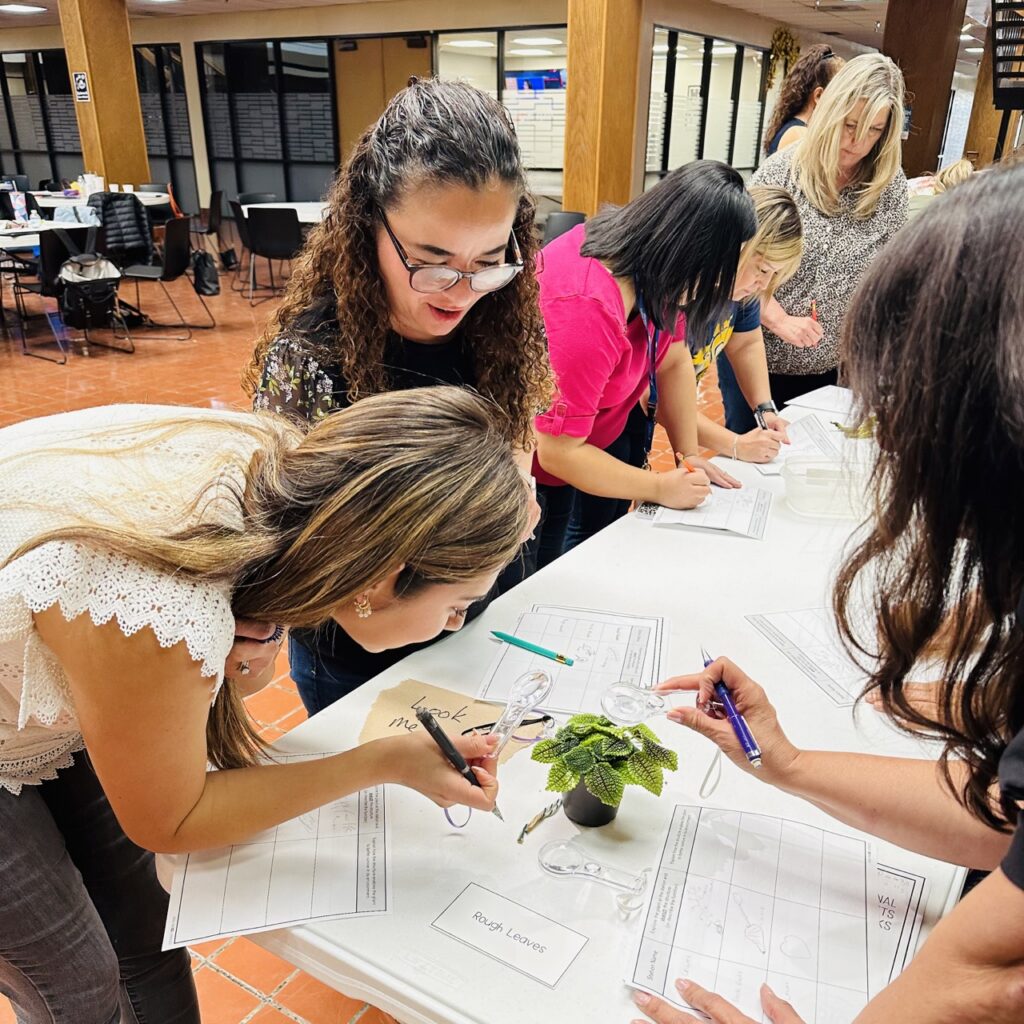
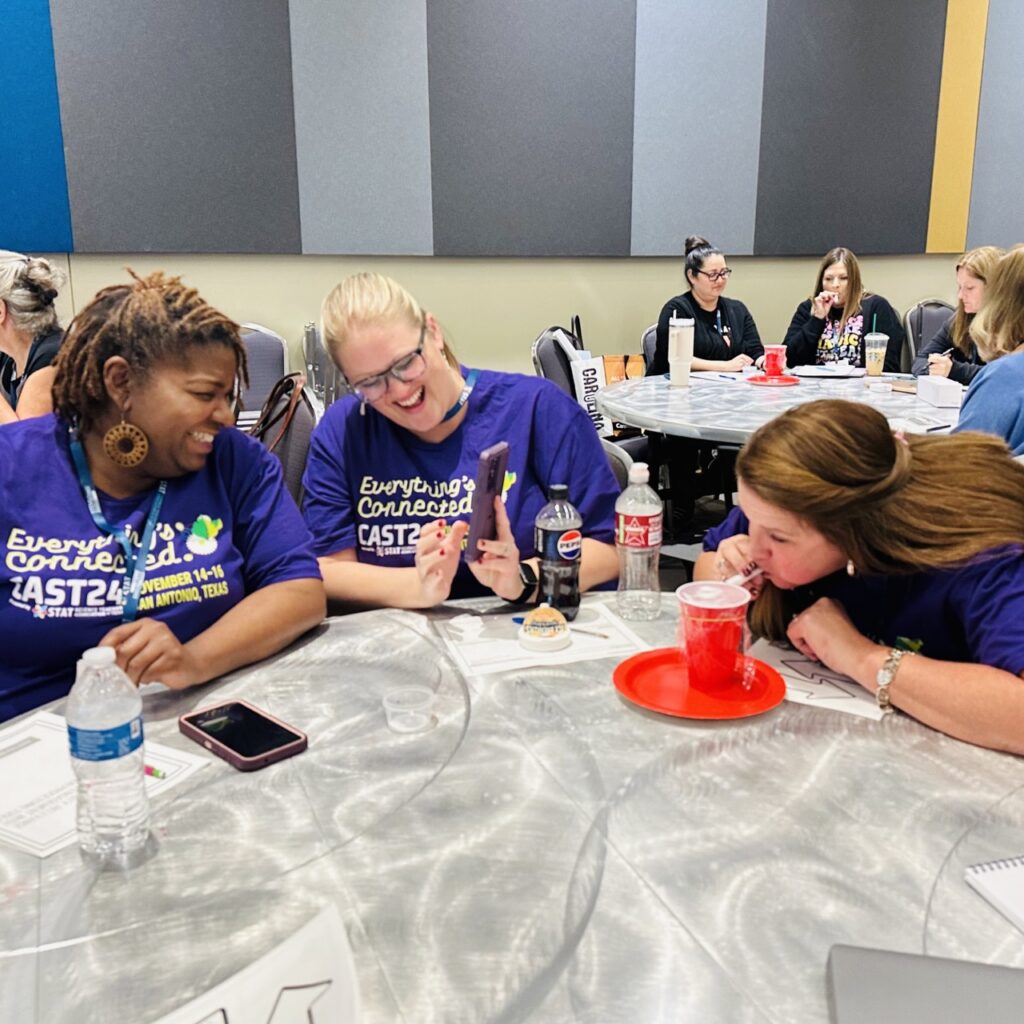
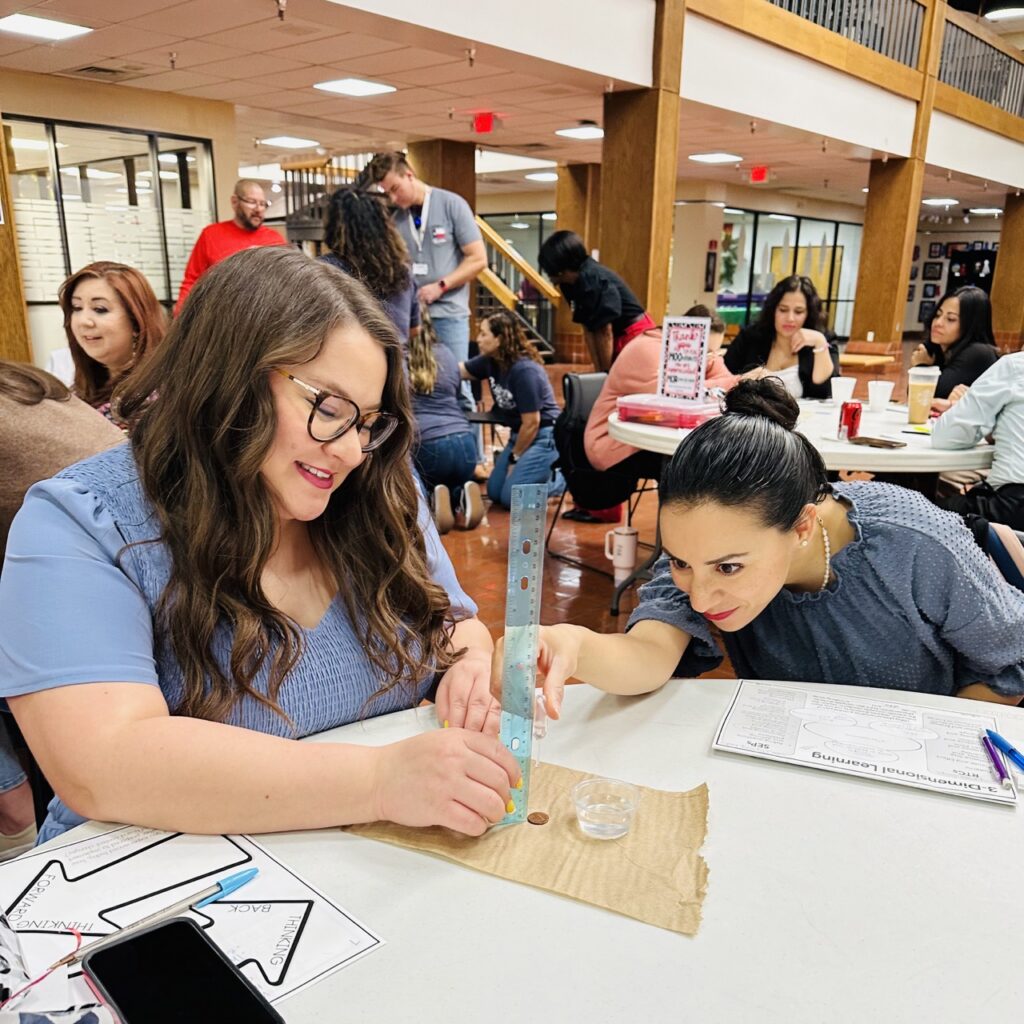
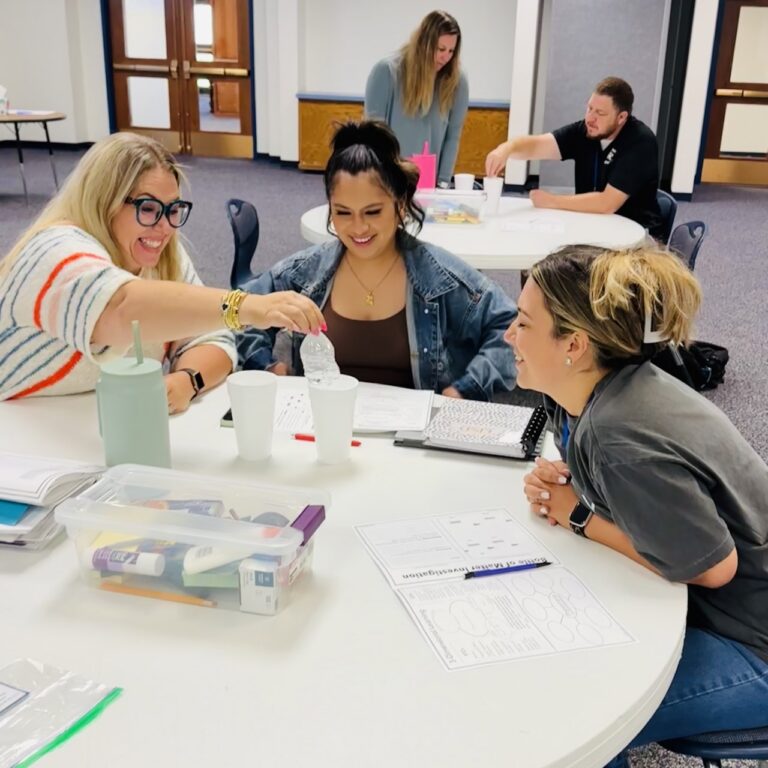
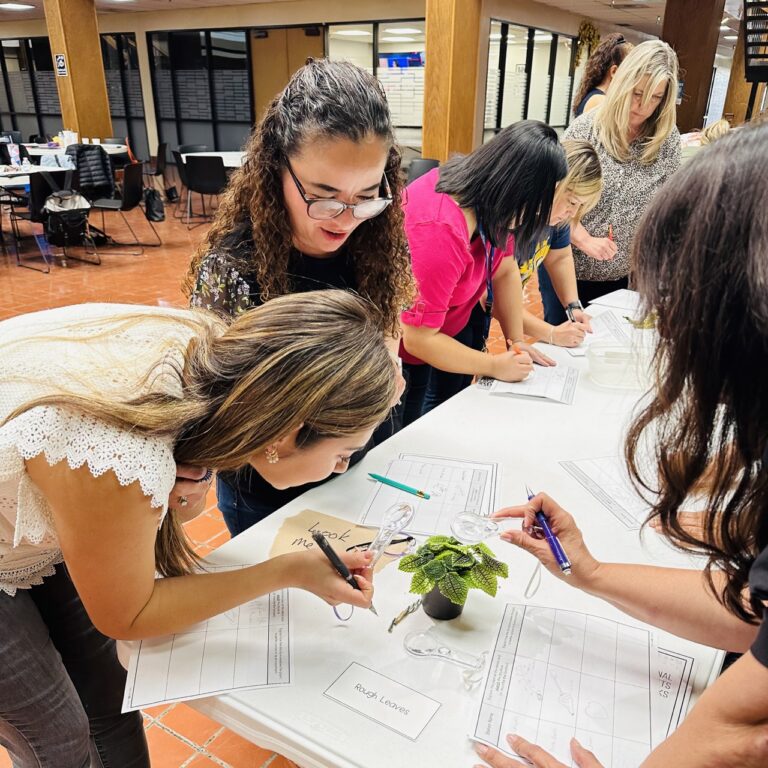
We offer engaging, hands-on professional development that models the use of research-based strategies and classroom-ready resources. We would love to bring our training to your district, either virtually or face-to-face, and help meet your needs! We also sometimes host open events for individual teachers to attend; check out our Upcoming Events page to see what open professional learning events we’re currently offering.

Science Is a Team Sport: Cultivating Communication and Collaboration

How can meaningful conversation and collaboration deepen student thinking? Grounded in the Science and Engineering Practices (SEPs), this session explores practical strategies for creating a classroom culture where students communicate ideas, listen actively, build on one another’s thinking, and engage in productive academic discourse. Discover ways to strengthen collaboration and communication while supporting students as they analyze, explain, argue from evidence, and make sense of science.
Learn More »

Modeling for Meaning: Using Models to Drive Sensemaking and Explanations

How can we help students use models to uncover their thinking, make sense of phenomena, and construct stronger explanations? In this session, participants will explore practical strategies for developing, using, revising, and evaluating models throughout instruction. Learn how purposeful modeling can make student thinking visible, deepen sensemaking, and support evidence-based scientific explanations. Participants will leave with tools to better leverage modeling as part of their three-dimensional instruction.

Learn More »

Exploring 3-Dimensional Instruction in the Science Classroom

How can we effectively utilize 3-dimensional learning in the classroom? In this session we look at practical, teacher-friendly ways to use real-world phenomena, science and engineering practices (SEPs), recurring themes (RTCs), and models more effectively to teach science content. We will consider strategies to better engage students, spark curiosity, and make connections to the real world. Participants will leave with ready-to-use, classroom-ready strategies for immediate implementation.

Learn More »

Building Critical Thinking Classrooms

How can we encourage all of our students to think deeper and more critically? Asking good questions, analyzing information, and drawing conclusions are crucial skills for success in the science classroom. In addition, cultivating strong reasoning skills is so important for 21st century learners.

Learn More »

Speaking of Science: Promoting Academic Conversation

How do we empower all students to speak with confidence in our classrooms? Current research is clear on the benefits of getting students talking about the content. It helps our students become better readers and writers, has a significant impact on retention and prepares them for the real world!

Learn More »

Exploring Practices for Highly Effective Instruction

These engaging sessions focus on equipping teachers with practices that allow them to establish and maintain a learning environment with high levels of student achievement. We immerse participants in six interrelated, research-based practices that together form a system for effective planning, instruction, and assessment in all classrooms.  

Learn More »

Strategies for Engaging the Gifted Learner in Science

This focused session will deal with differentiated curriculum and instructional strategies to address the needs of GT learners in the science classroom. The training will model strategies that target gifted students in understanding abstract concepts, utilizing critical reasoning skills while promoting interdisciplinary connections to support and develop high ability skills via research-based models.

Learn More »

Science Is a Team Sport: Cultivating Communication and Collaboration

How can meaningful conversation and collaboration deepen student thinking? Grounded in the Science and Engineering Practices (SEPs), this session explores practical strategies for creating a classroom culture where students communicate ideas, listen actively, build on one another’s thinking, and engage in productive academic discourse. Discover ways to strengthen collaboration and communication while supporting students as they analyze, explain, argue from evidence, and make sense of science.

Learn More »

Modeling for Meaning: Using Models to Drive Sensemaking and Explanations

How can we help students use models to uncover their thinking, make sense of phenomena, and construct stronger explanations? In this session, participants will explore practical strategies for developing, using, revising, and evaluating models throughout instruction. Learn how purposeful modeling can make student thinking visible, deepen sensemaking, and support evidence-based scientific explanations. Participants will leave with tools to better leverage modeling as part of their three-dimensional instruction.

Learn More »

Intentionality and the SEPs: Building a Culture of Doing

What does it take to build a science classroom where students actively do science rather than simply learn about it? In this session, teachers will explore how intentional instructional decisions can embed the Science and Engineering Practices (SEPs) into everyday learning. Participants will discover practical strategies that engage students in investigating phenomena, developing and using models, analyzing data, constructing explanations, and engaging in scientific discourse. Leave with ideas for creating a classroom culture centered on curiosity, critical thinking, and sensemaking.

Learn More »

Fostering Curiosity, Relevance, and Engagement with Phenomenon Processing Tools

Engaging students with real-world phenomena is crucial to making learning more relevant and meaningful, but how do we ensure that our students are connecting with the phenomena we share? In this interactive session, we will share practical strategies to help tap into student curiosity and foster authentic engagement with a variety of different types of phenomena. Participants will leave with ready-to-use phenomenon processing tools that can be used in any science context.

Learn More »

Phenomena That Work: Effectively Selecting and Strengthening Phenomena

What makes a phenomenon more than just an interesting hook? In this session, participants will explore how to select and strengthen phenomena that spark curiosity, drive student thinking, and support meaningful learning. Discover practical strategies for improving the use of phenomena throughout a unit of instruction to deepen student sensemaking and help students build a stronger understanding of science content.

Learn More »

Exploring 3-Dimensional Instruction in the Science Classroom

How can we effectively utilize 3-dimensional learning in the classroom? In this session we look at practical, teacher-friendly ways to use real-world phenomena, science and engineering practices (SEPs), recurring themes (RTCs), and models more effectively to teach science content. We will consider strategies to better engage students, spark curiosity, and make connections to the real world. Participants will leave with ready-to-use, classroom-ready strategies for immediate implementation.

Learn More »

Fostering Student Success on STAAR Redesign

STAAR will be shifting towards more innovative, interactive item types with less emphasis on traditional multiple-choice assessment. Participants in this engaging session will not only learn about new item types, but also how to use strategies that prepare students for the level of thinking and skills needed to be successful on the new STAAR.

Learn More »

Think Big Learning Biology STAAR/EOC Level Up

Need engaging ways to review for the Biology EOC? This 6-hour session models rigorous, interactive formative assessment activities that address all readiness standards and prepare students for success on the EOC! Participants will leave with digital copies of the activities that can be used to check for understanding, not only before the STAAR, but throughout the year as well.

Learn More »

Think Big Learning Middle School STAAR Level Up

Looking for effective, interactive STAAR review strategies? This 6-hour session models engaging, rigorous formative assessment activities that address all readiness and some supporting standards. Participants will leave with digital copies of the activities that can be used to check for understanding, not only before the STAAR, but throughout the year as well.

Learn More »

Think Big Learning Elementary STAAR Level Up

Looking to infuse your STAAR review with rigor and fun? This 6-hour session models engaging formative assessment activities that address all readiness and some supporting standards. Participants will leave with digital copies of the activities that can be used to check for understanding, not only before the STAAR, but throughout the year as well. 

Learn More »

Building Critical Thinking Classrooms

How can we encourage all of our students to think deeper and more critically? Asking good questions, analyzing information, and drawing conclusions are crucial skills for success in the science classroom. In addition, cultivating strong reasoning skills is so important for 21st century learners.

Learn More »

Fostering Student Success on STAAR Redesign

STAAR will be shifting towards more innovative, interactive item types with less emphasis on traditional multiple-choice assessment. Participants in this engaging session will not only learn about new item types, but also how to use strategies that prepare students for the level of thinking and skills needed to be successful on the new STAAR.

Learn More »

Speaking of Science: Promoting Academic Conversation

How do we empower all students to speak with confidence in our classrooms? Current research is clear on the benefits of getting students talking about the content. It helps our students become better readers and writers, has a significant impact on retention and prepares them for the real world!

Learn More »

Think Big Learning Biology STAAR/EOC Level Up

Need engaging ways to review for the Biology EOC? This 6-hour session models rigorous, interactive formative assessment activities that address all readiness standards and prepare students for success on the EOC! Participants will leave with digital copies of the activities that can be used to check for understanding, not only before the STAAR, but throughout the year as well.

Learn More »

Think Big Learning Middle School STAAR Level Up

Looking for effective, interactive STAAR review strategies? This 6-hour session models engaging, rigorous formative assessment activities that address all readiness and some supporting standards. Participants will leave with digital copies of the activities that can be used to check for understanding, not only before the STAAR, but throughout the year as well.

Learn More »

Think Big Learning Elementary STAAR Level Up

Looking to infuse your STAAR review with rigor and fun? This 6-hour session models engaging formative assessment activities that address all readiness and some supporting standards. Participants will leave with digital copies of the activities that can be used to check for understanding, not only before the STAAR, but throughout the year as well. 

Learn More »

Speaking of Science: Promoting Academic Conversation

How do we empower all students to speak with confidence in our classrooms? Current research is clear on the benefits of getting students talking about the content. It helps our students become better readers and writers, has a significant impact on retention and prepares them for the real world!

Learn More »

Science Is a Team Sport: Cultivating Communication and Collaboration

How can meaningful conversation and collaboration deepen student thinking? Grounded in the Science and Engineering Practices (SEPs), this session explores practical strategies for creating a classroom culture where students communicate ideas, listen actively, build on one another’s thinking, and engage in productive academic discourse. Discover ways to strengthen collaboration and communication while supporting students as they analyze, explain, argue from evidence, and make sense of science.

Learn More »

Modeling for Meaning: Using Models to Drive Sensemaking and Explanations

How can we help students use models to uncover their thinking, make sense of phenomena, and construct stronger explanations? In this session, participants will explore practical strategies for developing, using, revising, and evaluating models throughout instruction. Learn how purposeful modeling can make student thinking visible, deepen sensemaking, and support evidence-based scientific explanations. Participants will leave with tools to better leverage modeling as part of their three-dimensional instruction.

Learn More »

Intentionality and the SEPs: Building a Culture of Doing

What does it take to build a science classroom where students actively do science rather than simply learn about it? In this session, teachers will explore how intentional instructional decisions can embed the Science and Engineering Practices (SEPs) into everyday learning. Participants will discover practical strategies that engage students in investigating phenomena, developing and using models, analyzing data, constructing explanations, and engaging in scientific discourse. Leave with ideas for creating a classroom culture centered on curiosity, critical thinking, and sensemaking.

Learn More »

Phenomena That Work: Effectively Selecting and Strengthening Phenomena

What makes a phenomenon more than just an interesting hook? In this session, participants will explore how to select and strengthen phenomena that spark curiosity, drive student thinking, and support meaningful learning. Discover practical strategies for improving the use of phenomena throughout a unit of instruction to deepen student sensemaking and help students build a stronger understanding of science content.

Learn More »

Speaking of Science: Promoting Academic Conversation

How do we empower all students to speak with confidence in our classrooms? Current research is clear on the benefits of getting students talking about the content. It helps our students become better readers and writers, has a significant impact on retention and prepares them for the real world!

Learn More »

Think Big Learning Biology STAAR/EOC Level Up

Need engaging ways to review for the Biology EOC? This 6-hour session models rigorous, interactive formative assessment activities that address all readiness standards and prepare students for success on the EOC! Participants will leave with digital copies of the activities that can be used to check for understanding, not only before the STAAR, but throughout the year as well.

Learn More »

Think Big Learning Middle School STAAR Level Up

Looking for effective, interactive STAAR review strategies? This 6-hour session models engaging, rigorous formative assessment activities that address all readiness and some supporting standards. Participants will leave with digital copies of the activities that can be used to check for understanding, not only before the STAAR, but throughout the year as well.

Learn More »

Think Big Learning Elementary STAAR Level Up

Looking to infuse your STAAR review with rigor and fun? This 6-hour session models engaging formative assessment activities that address all readiness and some supporting standards. Participants will leave with digital copies of the activities that can be used to check for understanding, not only before the STAAR, but throughout the year as well. 

Learn More »

Strategies for Engaging the Gifted Learner in Science

This focused session will deal with differentiated curriculum and instructional strategies to address the needs of GT learners in the science classroom. The training will model strategies that target gifted students in understanding abstract concepts, utilizing critical reasoning skills while promoting interdisciplinary connections to support and develop high ability skills via research-based models.

Learn More »

Exploring Practices for Highly Effective Instruction

These engaging sessions focus on equipping teachers with practices that allow them to establish and maintain a learning environment with high levels of student achievement. We immerse participants in six interrelated, research-based practices that together form a system for effective planning, instruction, and assessment in all classrooms.  

Learn More »

Strategies for Engaging the Gifted Learner in Science

This focused session will deal with differentiated curriculum and instructional strategies to address the needs of GT learners in the science classroom. The training will model strategies that target gifted students in understanding abstract concepts, utilizing critical reasoning skills while promoting interdisciplinary connections to support and develop high ability skills via research-based models.

Learn More »

Show Me Something Different: Using Depth and Complexity to Differentiate Instruction

“Differentiation” is a common buzzword word in education, but the problem is that the word is defined similarly, but not the same, in schools. The concept also conflicts with the “one-size-fits-all” approach in many classrooms. The reality is that if students are not challenged to think in deep, complex, and meaningful ways that complement individual strengths and weaknesses, they begin to equate smart with easy, and begin to resist challenges and hard work.

Learn More »

30 Hour Gifted and Talented Workshop Series 

Giftedness traditionally has been defined as achievement or potential for achievement, and we differentiate our classrooms accordingly; however, there are distinguishing characteristics across the gifted spectrum that sometimes impede student learning.

Learn More »

Building Critical Thinking Classrooms

How can we encourage all of our students to think deeper and more critically? Asking good questions, analyzing information, and drawing conclusions are crucial skills for success in the science classroom. In addition, cultivating strong reasoning skills is so important for 21st century learners.

Learn More »